Before accepting a body contouring applicator warranty, ask who can assess a failed applicator, how a return is authorized and who confirms it is ready for use after service. Get the supplier’s coverage and costs in writing for the exact quote. An online contact page can tell you where enquiries start, but it does not define a repair commitment.
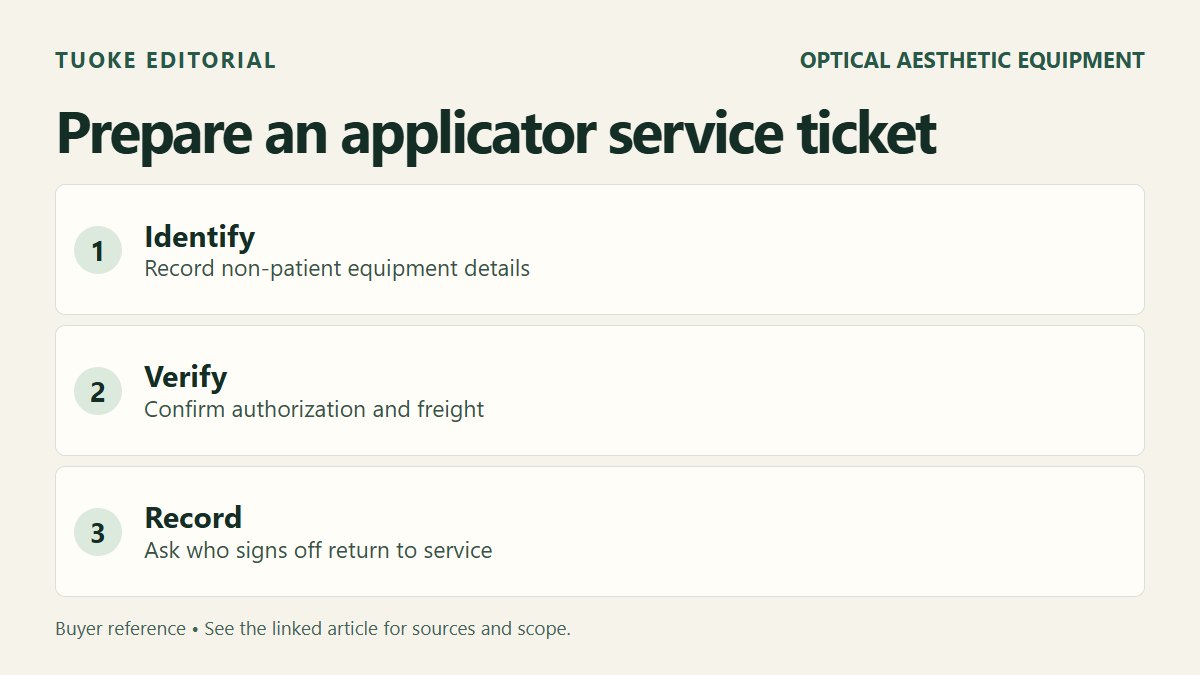
Read the service documents for your market
Allergan Limited’s UK CoolSculpting contact page provides a contact route. It does not establish a public applicator repair agreement, coverage period or turnaround. The US FDA K233732 file is a separate named example of technical documentation for a platform and applicator. It cannot supply the warranty for a shipment in the UK. Ask the actual selling party to identify the service provider, which terms apply in the purchase market and whether the warranty is transferable if the equipment is pre-owned.
Request a written list of covered components, what a report must contain and who approves packing and shipment. Ask about labour, parts, freight, diagnostics and written estimates when a repair is excluded. Define when the turnaround clock starts, what stops it and who updates the site while the applicator is away. If a loan item is available, verify how approval, costs and handover are handled rather than assuming replacement stock will arrive automatically.
Put the return questions into one equipment ticket
- Identification: Record the equipment and part reference, serial where applicable, and the order or registration reference.
- Outage: State when it was taken out of use and describe the issue in equipment terms. Avoid sending patient records or images to a routine service contact.
- Authorization: Record the service case, approved packing method, carrier responsibility and whether an estimate is required before work.
- Closure: Identify who reviews the service record and what confirmation must be in place for return to service.
For example, the clinic receives a message asking it to ship the applicator but learns that the seller has not assigned a service case. Staff put the request on hold while they confirm the authorized destination and documented handling instructions. Purchasing records which costs the vendor will accept and asks when the next update is due. Follow the organization’s separate incident procedures whenever relevant.
Close the repair and the paperwork
At return, have the designated staff compare identifying details and receive the service documents. If a part is exchanged, retain the old and new references where available so future warranty queries can be traced. Check that any required verification is completed by the appropriate personnel before the equipment returns to the schedule. The checklist addresses logistics and coverage questions. Use the applicable instructions and qualified advice for technical and clinical decisions.
A clinic may need a copy of the original estimate and a record of the fees accepted during repair. File them under the same case reference as the inspection outcome. That makes it easier to distinguish costs already approved from unexpected items on the final invoice.
See the optical aesthetic equipment resources for related buying questions.
Sources reviewed on 25 November 2026