Make payment and acceptance for a used professional IPL medical device conditional on three things: a serial-specific configuration list, a dated record of what changed, and written acceptance criteria reviewed by someone qualified to assess that model. Ask for these before paying a deposit. The service history may describe a different handpiece or software version from the one the reseller plans to ship, and reconciling the difference after delivery can delay opening a treatment room.
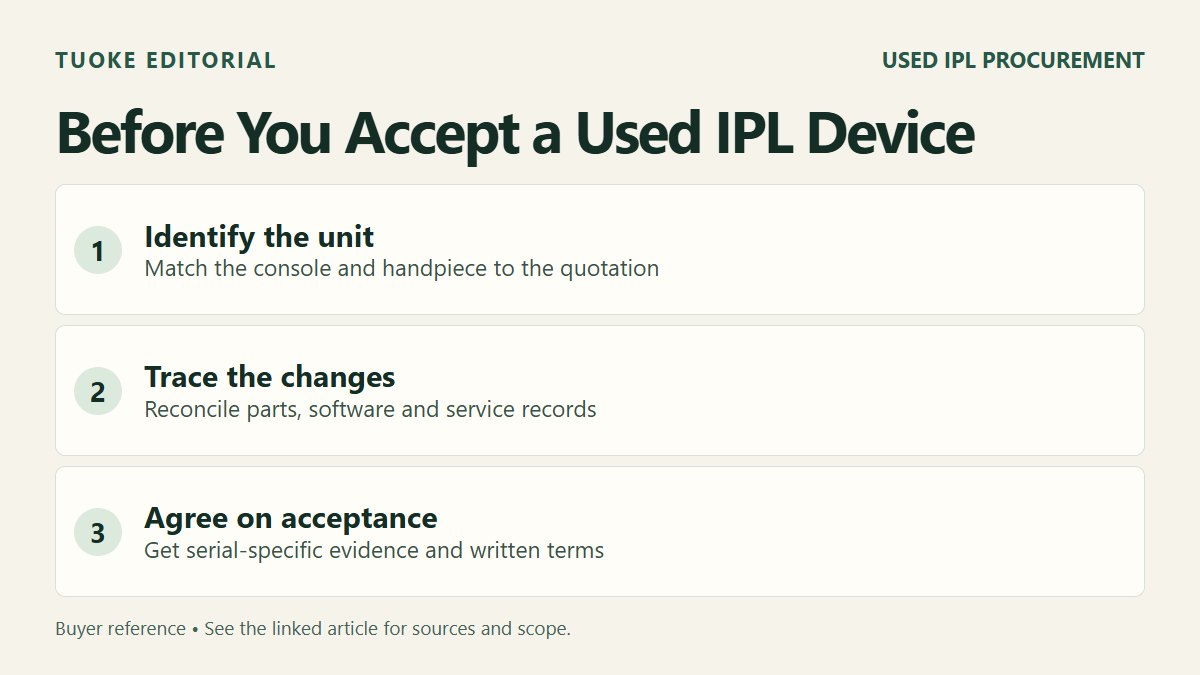
Start with the exact unit in the quote
Ask for legible pictures of the console identification label and every supplied handpiece. Have the seller put the console model and serial number, handpiece identifiers and installed software version on a configuration sheet. Match it to the quotation and the applicable manufacturer documentation. Ask how to verify model-specific notices and whether outstanding corrections apply to the serial number. If the seller expects to substitute an accessory after you sign, make the substitution subject to a fresh review and your written acceptance.
IPL here means intense pulsed light. This checklist concerns a reusable IPL unit marketed as a medical device in the United States. A laser, an LED device and radiofrequency equipment carry their own identifying records and instructions. A description such as “OPT” on a listing is a reason to ask for the exact device and labeling before deciding which documentation applies.
Ask what was changed and how it was evaluated
In its May 2024 final guidance, the FDA describes servicing as work intended to restore the device to the original manufacturer’s performance and safety specifications and intended use. A change significant enough to alter those specifications or intended use can constitute remanufacturing. Sections V and VI consider the combined effect of changes, and Section VII addresses software separately. The agency looks at the activity performed on the device. A description such as “refurbished” in the sale listing does not settle that question.
Suppose a seller says the console passed a power-on check after fitting a replacement handpiece and updating the software. Ask for the related work orders, parts identifiers, software release information and the documented findings for the resulting configuration. Ask the seller to identify who performed each activity and the basis on which they assessed it. If the information is incomplete, have a qualified technical or regulatory reviewer determine what evidence the seller still needs to provide. This review is distinct from pricing a future IPL handpiece service agreement.
Use the same acceptance record for every bid
- Before deposit. Reconcile the invoice, label photos and configuration sheet. Record each mismatch, the person responsible for resolving it and a deadline.
- Before shipment. Agree on the qualified inspection, model-specific acceptance criteria and who provides the report. Define what happens to the deposit or shipment if the seller cannot satisfy an agreed item.
- At delivery. Compare the received items with the approved sheet. Retain the work orders, applicable instructions and review results alongside the signed acceptance record.
Each bid can then be compared on the same terms, including any inspection charges and missing documentation. The FDA guidance is nonbinding. This purchasing method does not determine a particular unit’s legal status, replace a technical inspection or provide treatment instructions. For other documentation decisions, see the optical aesthetic equipment buyer guides.
Primary sources
- US Food and Drug Administration, Remanufacturing of Medical Devices, final guidance issued May 10, 2024. The current PDF begins with a note on the quality system rule effective February 2, 2026.
- US Food and Drug Administration, announcement explaining the servicing and remanufacturing distinction, May 9, 2024. Sources checked November 27, 2026.