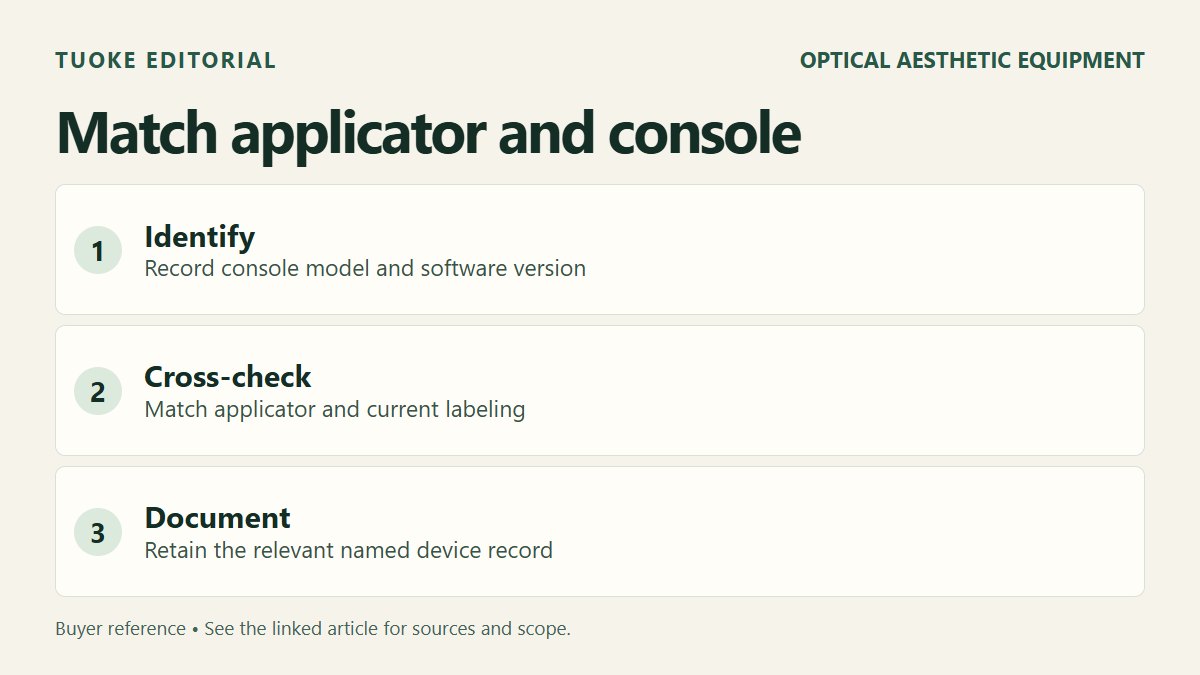
Before buying a body contouring applicator for a US clinic, match the quoted console model, software version and applicator part number to the current manufacturer labeling and applicable device record. Treat an optional applicator, a software change and a console as separate lines in the quote. Have the supplier resolve any mismatch before the unit is accepted.
Follow the record back to the exact combination
One illustration is FDA record K233732 for the CoolSculpting Elite System, with a decision dated 12 September 2024. The accompanying applicant summary identifies a software update and the S180 applicator in the submission. A buyer can use the record to identify the named changes, then ask the manufacturer which current labeling applies to the configuration actually offered. This record concerns that third-party system. It supplies no evidence that an accessory will work with a different console or software release.
Ask for the platform model and revision as supplied, the software release shown for the offered unit, and an itemized applicator list. For each item, request the labeling document name, revision and applicable mode or use where relevant. If the seller cites a regulatory record on a website, check the device name and the manufacturer, then confirm how the record connects to the exact quote. Save the controlled manufacturer instructions with the supplier’s explanation.
Keep a written compatibility cross-reference
- Console: Name, revision and quoted identifier. Log the supplied serial number, where available, in your receiving record so it can be connected to service documentation later. The public FDA record identifies device scope and does not verify the individual serial number.
- Software: Version or release, whether an update is included, and who is responsible for confirming the release at delivery.
- Applicator: Part reference, quantity, mode or use described in the current labeling and the manufacturer’s written compatibility evidence.
- Record: FDA record identifier if applicable, labeling revision and unresolved questions for the supplier or qualified clinic staff.
Imagine a quote in which the accessory is described as “large applicator” but the compliance packet uses a letter and number code. The item is still unidentified. Ask the supplier to map that description to the exact part reference and labeling before accepting the proposal. If a software change is required, it should be written into the quote and verified at handover. A receiving team can compare identifiers and records without treating a patient or attempting to establish device performance.
Set a clear boundary for acceptance
Agree on what will be demonstrated during handover and how an unexplained substitution will be resolved. Keep a dated list of accepted combinations available to whoever reviews service or replacement quotes. This procurement record is separate from clinical suitability, operator training and local requirements. This guide supplies no advice on which patients to treat or what outcomes to expect.
See the independent aesthetic equipment guides for related purchasing questions.
Sources: FDA decision record K233732, 12 September 2024, and its public summary and accompanying materials, reviewed 25 November 2026.