After sample approval, the practical answer is to run every proposed change through a written engineering change workflow: submit, classify, assess evidence, approve, then acknowledge the first affected lot. TUOKE’s OEM page is the named example for tying feasibility to a written proposal and for listing sample, specification, approval and inspection steps; its manufacturing page calls for an agreed sample stage and recorded changes. Ask both parties to agree on the approval route before making the sample the production baseline.
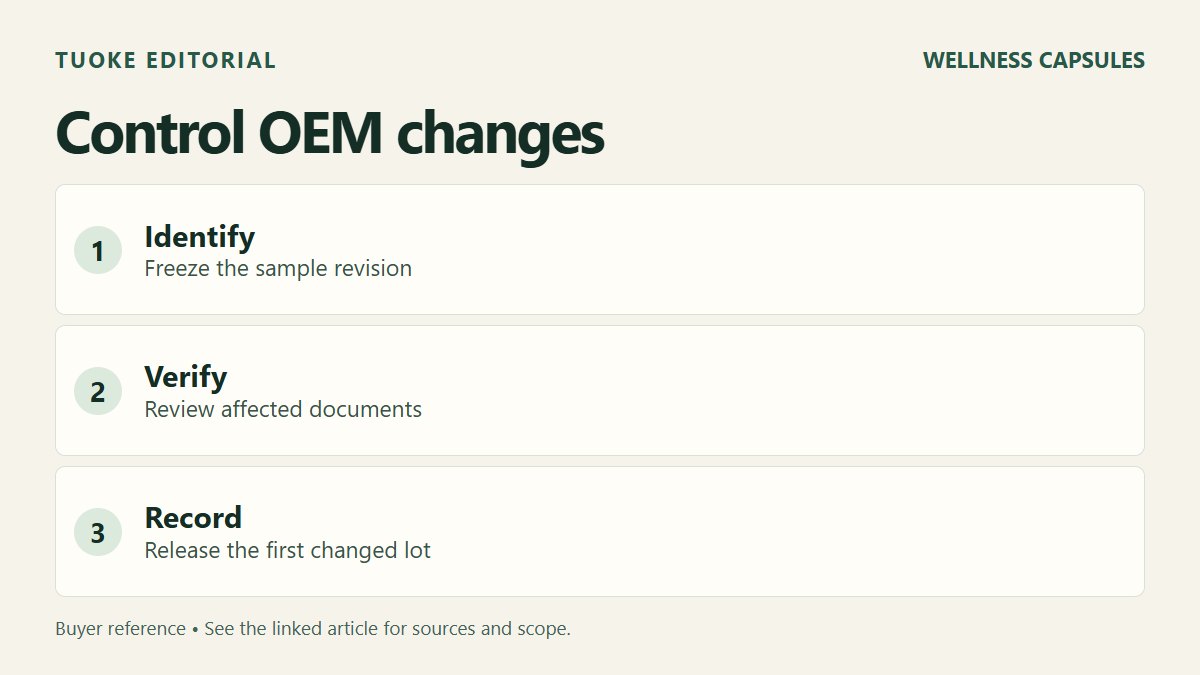
Submit and classify the request
Open a change record for every post-approval request. The worksheet should capture the change description, reason, affected specification, proposed first lot, and the written-proposal checkpoint it touches. Attach the sample approval ID and mark the document revision the change is meant to replace. If the sample control sheet is absent, ask the supplier to send it before reviewing the new request. Keep the change ID on the proposal baseline; a request that names no affected checkpoint is returned for completion.
Classify the request before review. An artwork-only change alters label or document content; a control-module swap alters a functional module. Treat classification as triage, not a legal exemption decision. A control-module swap should not be processed as paperwork merely because it looks like a component update, and artwork-only should not be assumed harmless without checking the record.
Assess evidence, approve and acknowledge
For each class, define the evidence needed to close the record: revised specification, comparison against the approved sample, updated inspection steps, and named approvers. TUOKE’s manufacturing page supports recording changes at an agreed sample stage; the evidence thresholds and approver roles are buyer-defined method. Record a decision of approve, approve with conditions, or reject, with the reason. The record should be readable by purchasing, quality and the supplier.
Acknowledge the first affected lot in writing. The acknowledgment should name the change ID, the lot, the effective date, and the approval it relies on. Do not release that lot until the record links approval to the lot. This closes the loop between the written proposal and the recorded change.
Worked example, decision rule and source limits
A buyer approved sample S1. The supplier submits two requests. For an artwork-only label revision, classify it as a document change, assess the revised artwork and inspection checklist, approve the record, then acknowledge the first lot carrying the new label. For a control-module swap, classify it as a technical change, require an updated specification and evidence against the agreed sample and approval checkpoints, then acknowledge the first lot only after the record is complete. Do not conclude that either request is legally exempt; that question is outside this workflow.
Decision rule: if a request cannot be tied to the written proposal, cannot show class-appropriate evidence, lacks a recorded approval, or has no first-lot acknowledgment, hold it for clarification. Release check: Ask receiving to inspect the first affected carton against the new artwork and to check that the installed control revision agrees with the revised documents. A purchase order or artwork approval alone does not establish regulatory compliance.
See the wellness capsules resources for related buying questions.
Sources reviewed on 25 November 2026
Explore Wellness Capsules
Compare equipment formats and request documentation for the exact model and destination market.
Wellness Capsules product category