Short answer: plan a commercial sauna capsule room from the exact unit’s operating drawing, rating plate, manual and cleaning procedure. A closed-product photograph or a nominal footprint is not enough. Before ordering, draw the capsule with its lid or entrance in the open position, test the path a client and staff member will use, and have a competent person check the proposed electrical supply. This guide is for spa and wellness operators in Great Britain; it does not replace a site assessment or the manufacturer’s instructions.
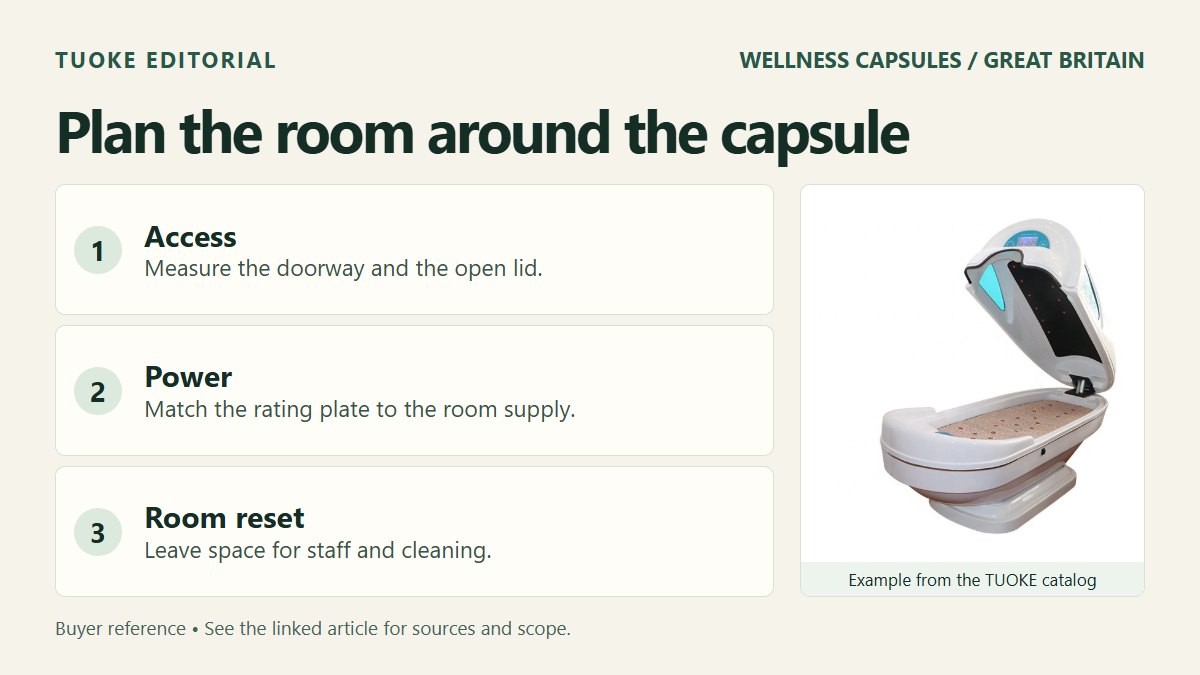
Start with the open-state drawing
Ask the supplier to identify the model and revision in the quotation, then provide a dimensioned drawing for that same configuration. Mark the overall width, length and height in both the closed and open states. Add the space needed to enter and leave the capsule, reach the controls, open any service panel, remove a pad for cleaning and move around the unit without pulling on the power cable. A ceiling height that fits a closed capsule may still obstruct an opening lid. A floor plan that fits the machine but blocks a door or cleaning route is not an installation plan.
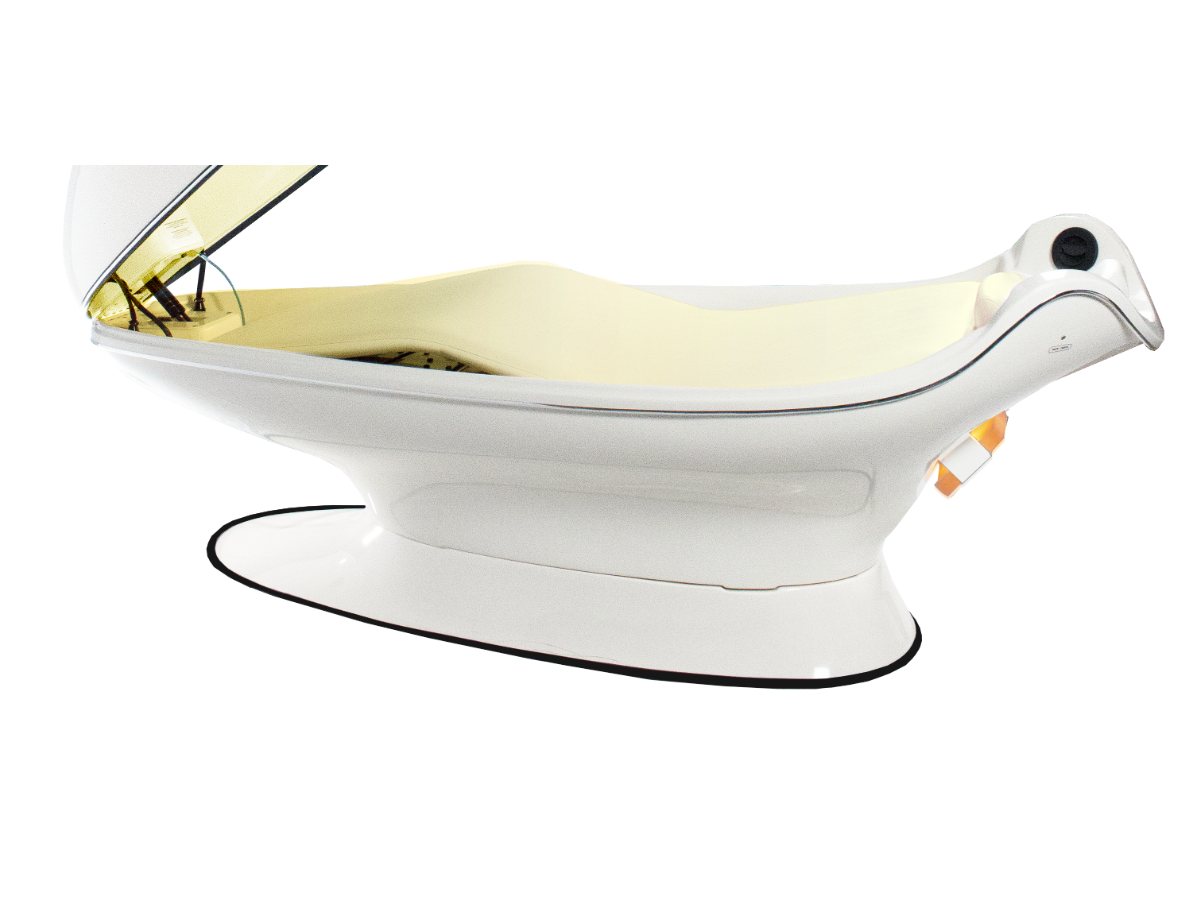
There is a concrete reason to request a drawing rather than copy a number from a sales page. The undated manufacturer listing for one Fuerle FUL-8505 infrared spa capsule shows different dimensions in its attributes and description. That listing is a useful example of a capsule format, but it cannot establish the dimensions of a TUOKE quotation or resolve the discrepancy for a particular unit. Ask which dimensions apply to the exact model, how they were measured and whether accessories change the required clearance.
Walk the client and staff route
On a scaled plan, trace delivery from the loading point through doors, corridors and turns into the room. Then trace a client journey: arrival, changing, approach to the capsule, entry, exit and the route out. Have a staff member rehearse where they would stand to explain the controls, observe a session and respond if a client wants to stop. Do this before treating the room capacity as fixed. If access is awkward for the people you intend to serve, request a different layout or equipment format rather than relying on a promotional image.
Reserve a separate area for clean supplies and used linens. Record who cleans the contact surfaces, which products the manufacturer permits, how long the unit must cool before cleaning and how staff check that it is ready for the next person. These are operating questions for the actual manual; the supplier’s product photograph does not answer them. The result should be a repeatable service flow, not merely a machine that fits between two walls.
Check power against the room, not a plug photograph
The UK Health and Safety Executive’s guidance for electrically powered work equipment, updated 3 April 2025, says operators should assess risks, choose equipment suitable for the work, check its condition and make sure it suits a safe electrical supply. It specifically tells users to check the voltage and whether the supply can deliver the current the equipment requires, using the rating plate. HSE also discusses residual current devices as an additional protective measure; it does not say that adding one makes an unsuitable installation safe.
Request the model’s current rating-plate photograph, installation manual, plug or connection specification and any separate requirements for accessories. Give these to a competent electrical professional with the intended room and circuit details. Ask how the cable will be routed so clients do not trip or damage it, how the unit will be isolated for servicing, and what staff should do if they see a damaged cable, overheating marks or a recurring electrical fault. HSE advises stopping use and seeking a competent check when equipment safety is in doubt. Do not infer electrical compatibility from a supplier’s list of possible destination-country plug types.
Test the service before estimating revenue
Build a trial timetable using the actual steps: explanation, preparation, entry, the supervised session described by the manual, exit, cool-down if required, cleaning and reset. This reveals whether a proposed booking interval is feasible. Use your own staffing costs and real demand evidence; a supplier’s claimed treatment effects, suggested session count or national wellness-market figure is not a forecast for your venue. Likewise, a sauna capsule should not be described as a proven weight-loss or medical treatment on the strength of a product listing.
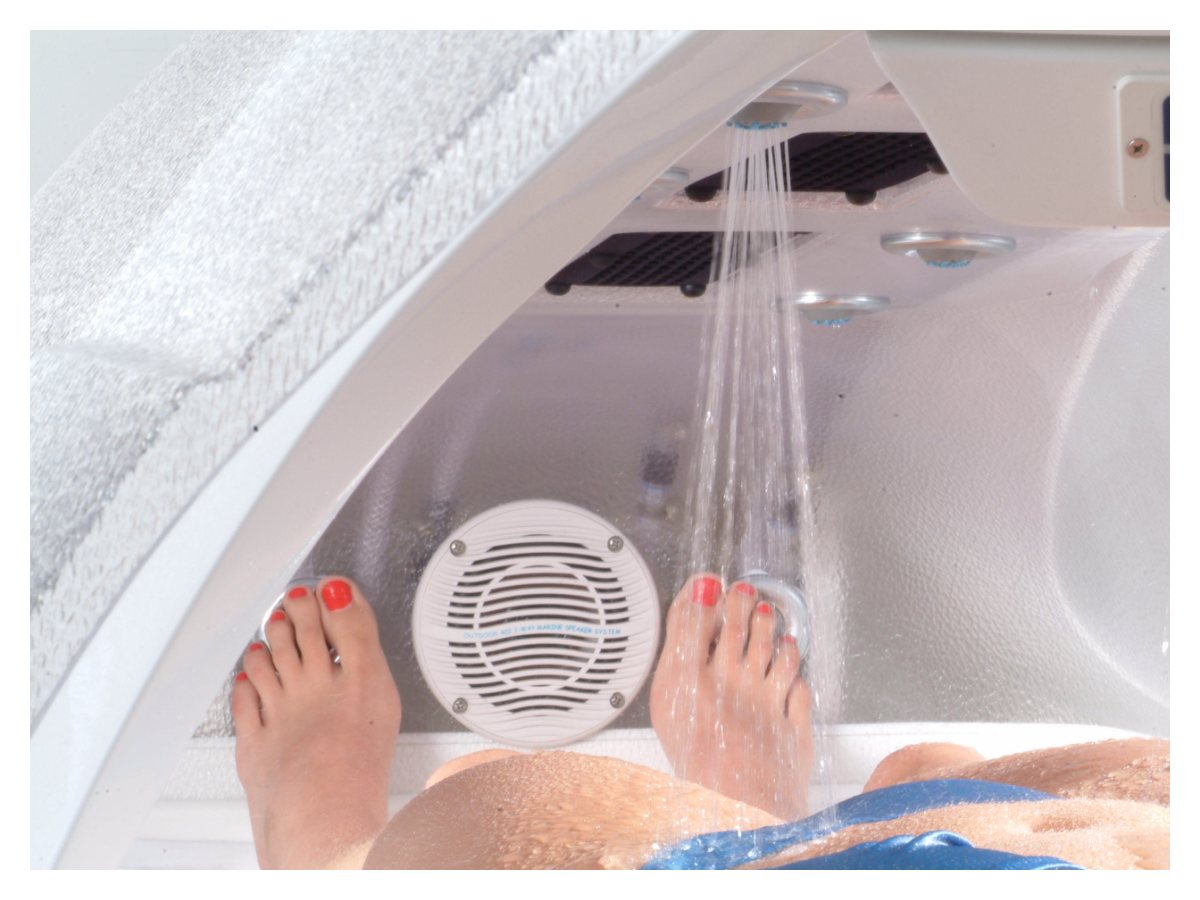
Put unresolved questions in the purchasing file: exact model identity, open-state drawing, delivery route, electrical sheet, operating and cleaning instructions, service access, staff training, warranty and spare-parts process. The TUOKE wellness capsule range shows the equipment formats available for discussion; request the documents for the specific quoted unit before approving the room plan. This approach also helps compare a capsule with a sauna dome or other heat-based format on practical grounds instead of assuming that similar names mean similar installation needs.
Sources and limits
- Health and Safety Executive, “Work using electrically powered equipment”, Great Britain guidance, updated 3 April 2025; accessed 24 November 2026. It gives general work-equipment principles, not a model-specific capsule approval.
- Fuerle, FUL-8505 infrared sauna capsule product listing, publication date not displayed; accessed 24 November 2026. Its web specifications should be checked against a current signed model sheet and must not be transferred to a different TUOKE product.
This is practical purchasing guidance, not electrical, clinical or legal advice. Requirements can differ in Northern Ireland and in other destination markets. Confirm site-specific duties with qualified local advisers and the current manufacturer documentation.
Explore Wellness Capsules
Compare equipment formats and request documentation for the exact model and destination market.
Wellness Capsules product category